
Our Campus
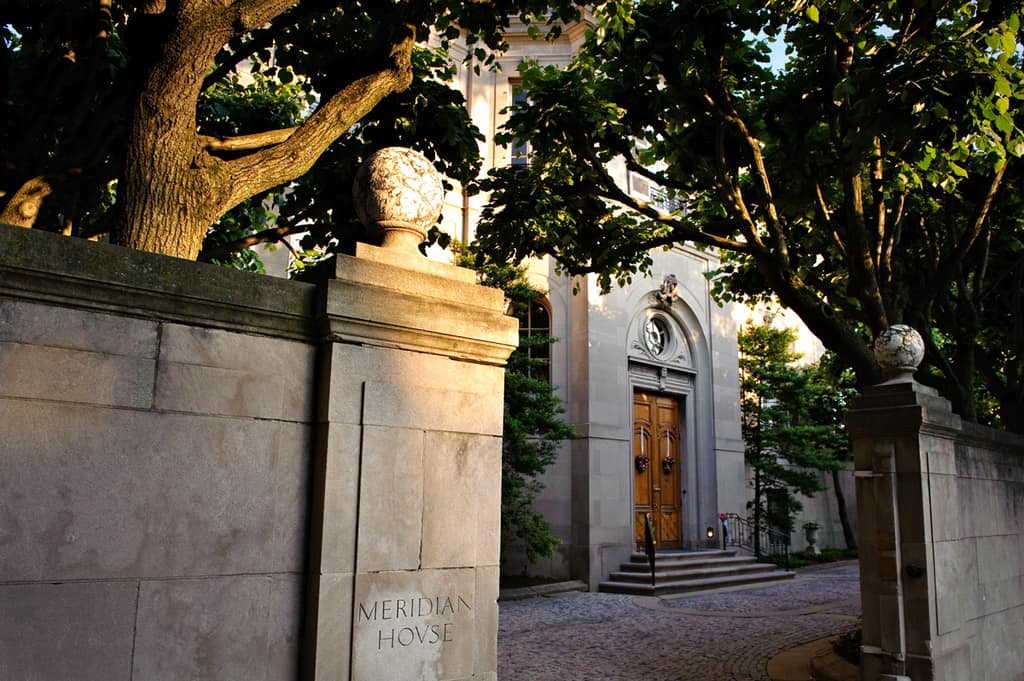
Meridian House
A residential jewel designed by John Russell Pope, architect of the Jefferson Memorial and the National Gallery of Art (West Building).
“Perhaps as fine a piece of work of its kind as this country can show… Certainly the manner of this house has not in this country been better done.”
The house
Architectural detail, preserved
After undergoing a major renovation in 1994, Meridian House’s principal rooms retain their architectural detail and original decorative features. The dining room features a beautiful Mortlake tapestry, dated by experts as late 17th century, purchased by the Laughlin family in England.
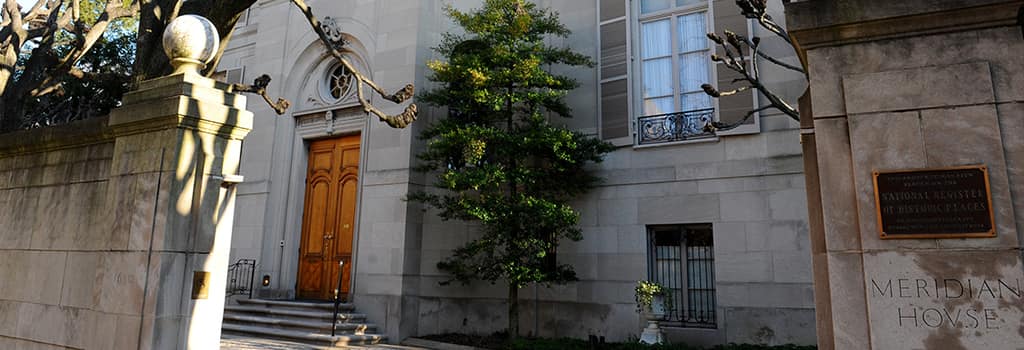
The Latin inscription over the front door — “Quo habitat felicitas nil intret mali” — translates “Where happiness dwells, evil will not enter.”
The gardens
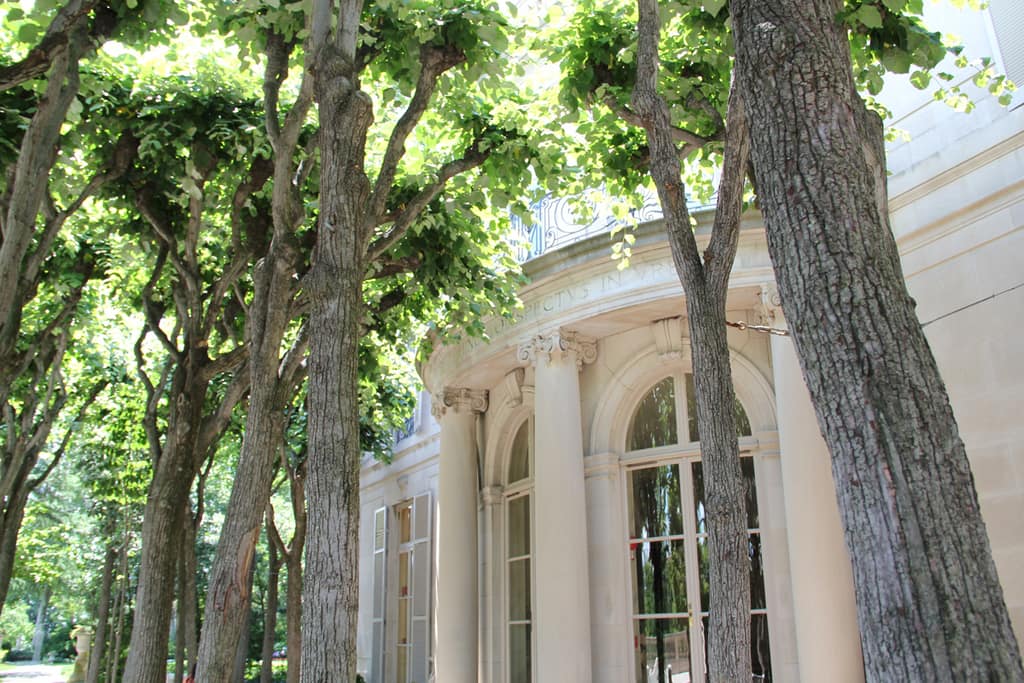
Forty linden trees, imported from Europe
The rear and side gardens largely retain their original design. The pebbled courtyard has 40 linden trees, imported from Europe when the house was built.
Meridian House is listed on the National Register of Historic Places. The grounds and first floors of both houses are open to the general public by appointment only.
Meridian House history
From private residence to center of diplomacy
Meridian House, at 1630 Crescent Place, was built by Ambassador Irwin Boyle Laughlin. He purchased the land in 1912, two years after his friend Henry White bought the adjacent property. Ambassador Laughlin was married to Therese Iselin, daughter of New York banker Adrian Iselin.
In 1960, a newly created nonprofit organization dedicated to promoting international understanding — which later became Meridian International Center — received a grant from the Ford Foundation to purchase the house.
Experience the house
Host your event at Meridian House
Site tours by appointment, Monday through Friday.